Now open
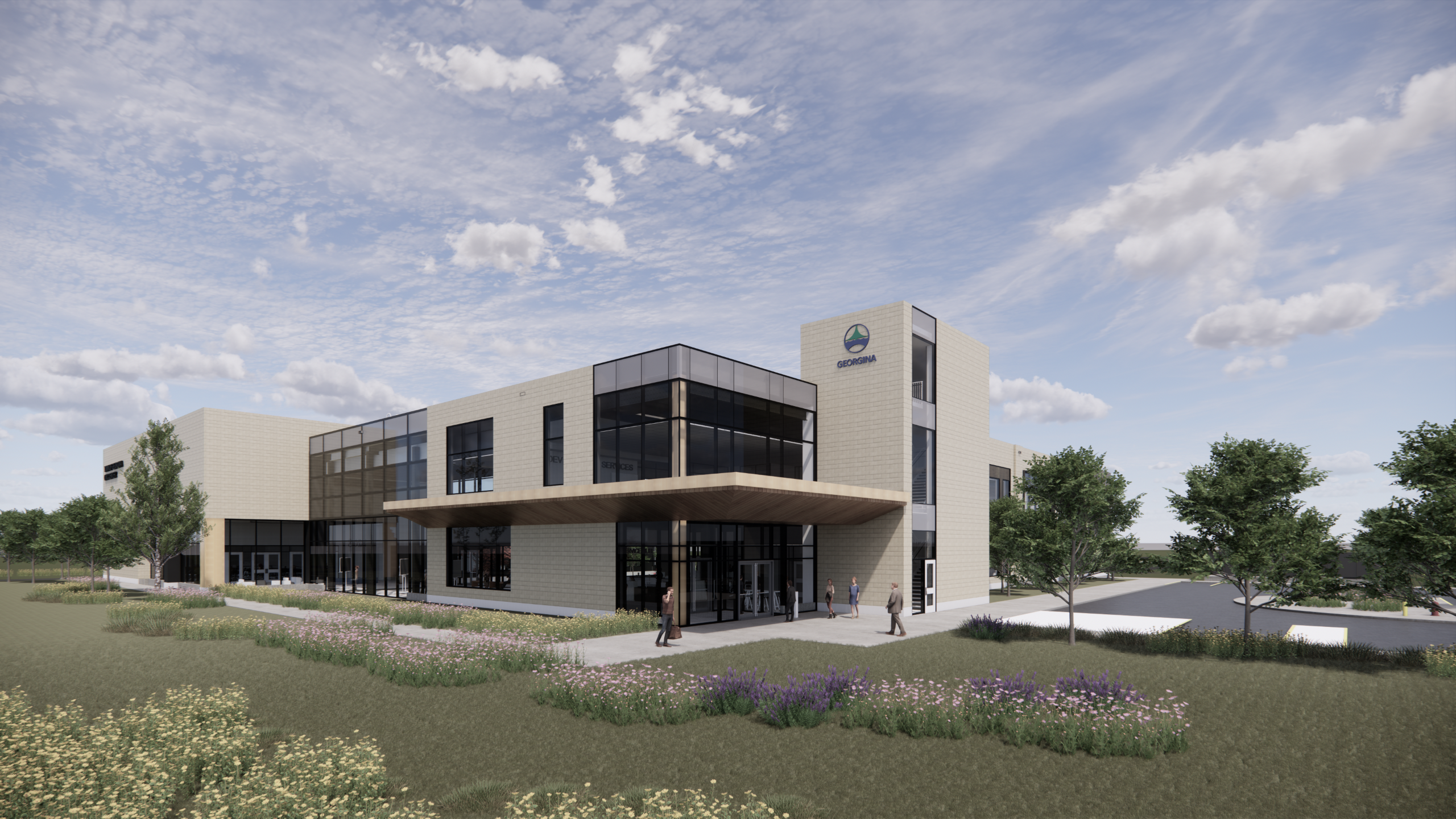
The Replacement Civic Centre is now open to the public for regular business hours. The Replacement Civic Centre is located beside the original building and keeps the same address and phone number: 26557 Civic Centre Rd., 905-476-4301.
Media release - March 3, 2026
Overview
On March 7, 2018, Georgina Council voted to build a replacement Civic Centre on the same campus property, replacing the original building that was built in 1958 and has reached the end of its life expectancy.
The decision followed extensive analysis and reports that explored:
- The state of the original Civic Centre building
- Other potential locations
- Options for a retrofit of the current building versus a new build
- Health and safety conditions and work environment
A building condition assessment in 2016, and again in 2022, identified many areas where improvements were required in order for the current building to comply with the Accessibility for Ontarians with Disabilities Act (AODA). The assessments also identified numerous deficiencies related to health, safety and operational risks. Routine air‑quality tests determined there was a presence of “mouldy odours” in sections of the building, which prompted the closure of two separate areas to allow remediation work to occur.
Refer to the links under Documents to access all relevant Council reports, media releases and other materials related to the replacement Civic Centre project. In addition, the timeline to the right provides the chronology of events, along with historical information related to the existing building and the project.
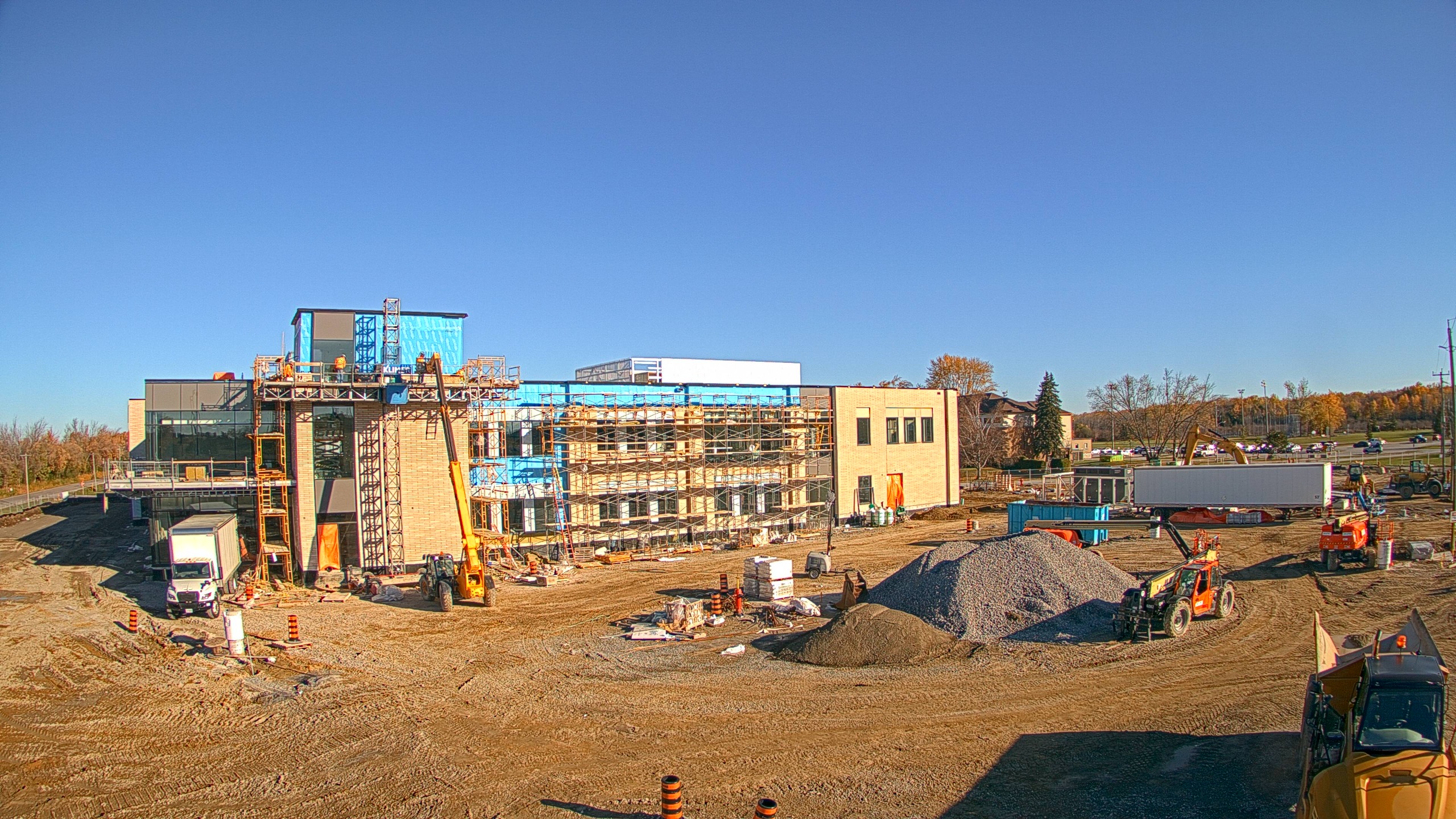
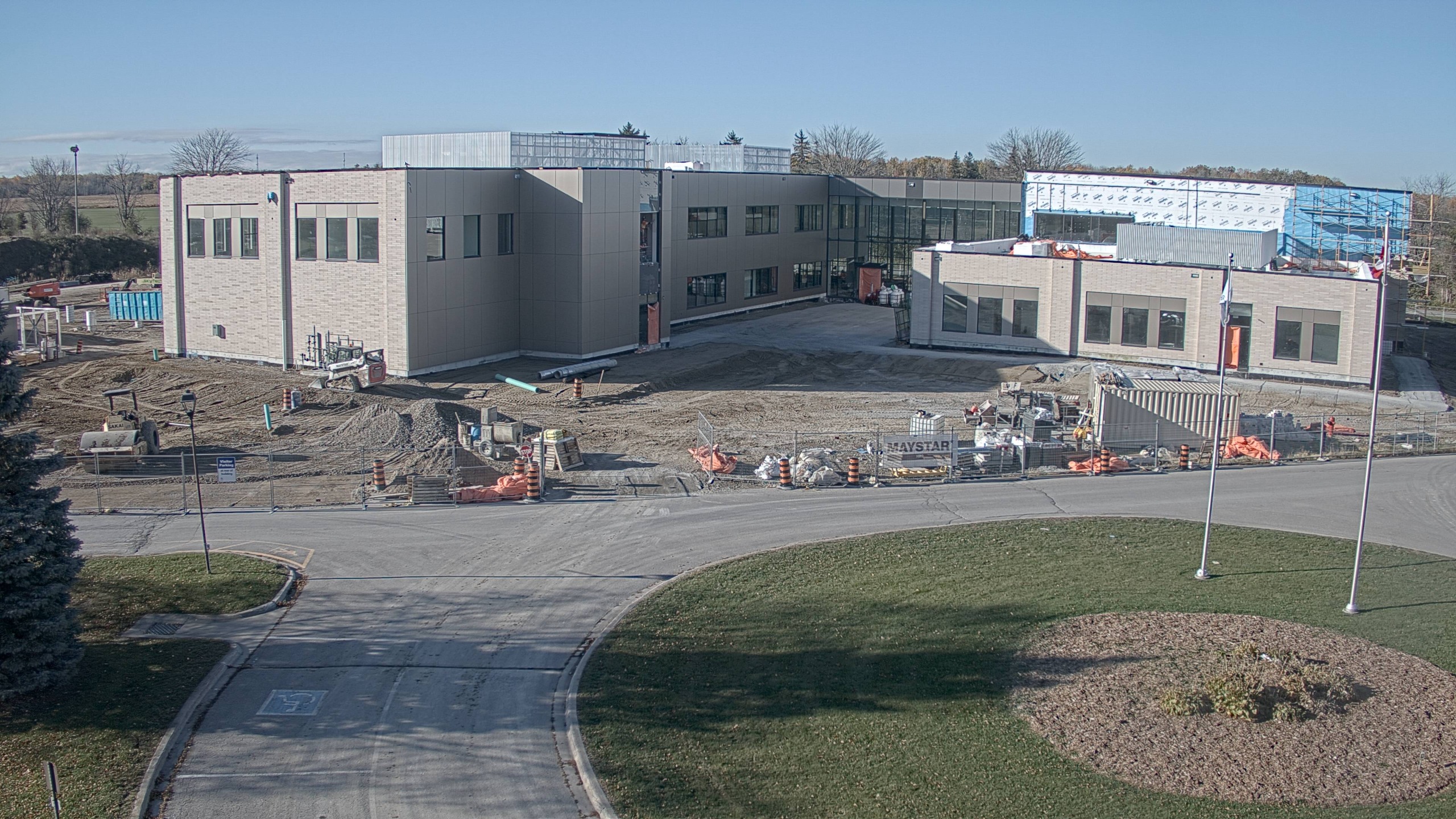
The Replacement Civic Centre is now open to the public. Exterior site works, as well as the demolition of the existing 1958 building, will take place largely over Q2 and part of Q3 2026.
Project updates
In March 2020, COVID-19, a global pandemic, forced governments and health authorities throughout the world to establish health and safety measures, including work from home and physical distancing orders. The Town of Georgina, in compliance with provincial orders, directed most staff to work from home wherever possible.
Around mid-June 2020, the Town decided to pause further progress of the replacement Civic Centre project design activities. The Town directed CBRE (Project Management, Workplace Strategy and Furniture team) to conduct a reassessment of the Town’s needs in view of the accelerating trends towards remote working and remote public service delivery, and to determine whether this could result in a reduction of the required building size and cost.
In the summer of 2020, CBRE implemented and completed an update to the Workplace Strategy. In 2021, Council endorsed the redesign of the replacement Civic Centre under the revised Workplace Strategy and directed the building be redesigned as a centralized hub complemented by a work-from-home approach. In October of 2022, the Town introduced its official Flex Work Arrangements Policy which formalized the ability to work from home.
The option to stay in the original Civic Centre was assessed throughout 2016/17. Assessments were reviewed in 2018 and then again in 2021. The decision in both cases was not to stay in the original Civic Centre.
The original Civic Centre building is 65 years old and has many key building systems and issues that affect everyday use and that need to be addressed.
Asbestos: Investigations have found asbestos-containing material in the building (mainly in the basement) in the piping insulations, piping elbows, valves and hangers, ceiling and floor tiles, and their associated adhesives, with some associated asbestos containing building material used in the building construction, including the roofing tar and the boiler room refractory chimney lining and brick masonry cements. If any of this needs to be disturbed, then it needs to be properly removed and disposed of which would require the temporary relocation of staff and services.
AODA: Numerous AODA compliance items (such as doors and doorway widths, a new AODA compliant elevator which will likely require a building addition for a new larger elevator shaft, two universal washrooms per floor that could require concrete block wall renovation to make the spaces larger, as well as ramp and railing retrofits) will have to be addressed when renovating the other major building systems.
Air quality and building systems: Existing air quality and air circulation is poor and utilizes an old radiator-type heating system. A total new HVAC system is required. There are potential structural issues with the existing roof in terms of supporting rooftop HVAC units. Routing of ductwork and the HVAC system throughout the existing building will be problematic. The building does not have a fire suppression systems and so a new fire alarm sprinkler system needs to be designed and installed. This will also need to be routed throughout the building while trying to respect clear heights, etc. A new fire alarm panel will also be required. The main electrical panel needs to be replaced and likely the subsequent electrical wiring in order to meet the current codes. The emergency generator needs to be overhauled to ensure adequacy as well as that system meets the required regulations and codes.
Functionality: The building was originally designed in 1958 to function as an institutional residential building for a religious organization. It was repurposed by the Town as an office building and several additions and alterations have been made over the years. As a result, the building was never functionally designed and suited as an office space, especially given today’s designs and standards that place importance on employee wellbeing and customer interaction.
FAQs
The Replacement Civic Centre is located beside the current building and keeps the same address and phone number: 26557 Civic Centre Rd., 905-476-4301.
Parking spaces are available outside the main doors for visitors, including anyone with accessibility requirements.
Residents and visitors accessing in-person services as of March 16 are to use the new driveway entrance located immediately south of the new building to access the visitor parking lot.
For general inquiries, visit the Service Georgina desk on the main floor.
For services related to building and planning, visit the Development Services desk on the second floor.
The new building is fully accessible, including the elevator.
The original Civic Centre building will be demolished. Demolition of the existing building was previously approved by Council and is already included in the Town’s contract for the replacement Civic Centre project.
The original Civic Centre has reached the end of its life expectancy and has significant deficiencies that make it unsuitable for continued use.
Assessments of the building identified major issues related to accessibility, health and safety, building systems and operational function. These include asbestos-containing materials, poor air quality and circulation, outdated heating and electrical systems, the lack of a fire suppression system and major Accessibility for Ontarians with Disabilities Act (AODA) compliance issues.
Council approved demolition of the existing Civic Centre as part of the overall replacement Civic Centre project, and demolition is included in the Town’s existing construction contract.
The Town investigated whether the existing Civic Centre could be used for affordable housing and found that it is not a practical or cost-effective option.
The building is in poor condition and would require substantial upgrades to support residential use, including major architectural, mechanical, electrical, plumbing, fire safety and accessibility work. Converting the building from office use to housing would also likely require upgrades to sanitary servicing, power supply, ventilation, parking and stormwater management.
In addition to the building-related challenges, the site is not well suited for housing. It is located on a public recreation campus in a rural area with limited access to transit, sidewalks, grocery stores, pharmacies, health services and other amenities typically needed to support residential use.
York Region also completed a review and found that the site and building do not have high potential for retrofitting as emergency, transitional or community housing, and that the renovation and retrofit costs would be expected to far exceed established standards.
On March 7, 2018, Council voted to build a replacement Civic Centre on the same campus property after extensive analysis of the existing building, other possible locations and the option of retrofitting the current facility.
The original Civic Centre was built in 1958 and has reached its life expectancy. Building condition assessments completed in 2016 and 2022 identified significant deficiencies related to accessibility, health and safety, air quality and overall functionality. The building was also not originally designed to serve as a modern municipal office and public service facility.
A new building was determined to be the best long-term solution to provide a safe, accessible, functional and efficient space for residents, staff and visitors.
The overall project budget was approved by Council at $54.1M. This budget accounts for the new building and demolition of the current Civic Centre, effective taxes, design and contract administration, all furniture, fixtures and equipment including AV and IT, all past site testing, surveying and consultant reporting, future testing and commissioning as well contingency funds.
The approved financial plan can be found in the May 8, 2024 Council Agenda.
As per Recommendation #2 of Resolution C-2023-0105, $50M was the approved budget for the Replacement Civic Centre project.
Within the Jan. 24, 2023 Council report the Class D estimate (a Class D estimate being within a +/- 25% range) for the construction, including demolition, site works and a $3.8M contingency was accepted at $42M. Therefore, the estimate for the construction was $38.2M.
Despite all efforts to predict the actual future cost, it is ultimately the competitive bidding process that results in the best price based on the current economic market and what bidders are willing to commit to for a lump sum price.
The lowest bid price of $41,850,000 is $3,650,000 above the $38.2M estimate. This is a 9.6 per cent increase, but still well within the Class D estimate range. This, along with the resultant increases in contingency and effective taxes, has resulted in an increase of approximately $4M leading to the increased required project budget of $54M. The budget increase was approved by Council on May 8, 2024.
The original Civic Centre building is 65 years old. It has many issues/deficiencies that affect everyday use.
Asbestos: Investigations have found asbestos-containing material in the building (mainly in the basement) in the piping insulations, piping elbows, valves and hangers, ceiling and floor tiles, and their associated adhesives, with some associated asbestos containing building material used in the building construction, including the roofing tar and the boiler room refractory chimney lining and brick masonry cements. If any of this needs to be disturbed, then it needs to be properly removed and disposed of which would have required the temporary relocation of staff and services.
AODA: Numerous AODA compliance items (such as doors and doorway widths, a new AODA compliant elevator which would have likely required a building addition for a new larger elevator shaft, two universal washrooms per floor that could have required concrete block wall renovation to make the spaces larger, as well as ramp and railing retrofits) that would have needed to be addressed when renovating the other major building systems.
Air quality and building systems: Air quality and air circulation in the original Civic Centre is poor and utilizes an old radiator-type heating system. A total new HVAC system is required. There are potential structural issues with the existing roof in terms of supporting rooftop HVAC units. Routing of ductwork and the HVAC system throughout the existing building will be problematic. The building does not have a fire suppression systems and so a new fire alarm sprinkler system would need to be designed and installed. This would also need to be routed throughout the building while trying to respect clear heights, etc. A new fire alarm panel would have also been required. The main electrical panel would have needed to be replaced and likely the subsequent electrical wiring in order to meet the current codes. The emergency generator would have needed to be overhauled to ensure adequacy as well as that system meets the required regulations and codes.
Functionality: The building was originally designed in 1958 to function as an institutional residential building for a religious organization. It was repurposed by the Town as an office building and several additions and alterations were made over the years. As a result, the building was never functionally designed and suited as an office space, especially given today’s designs and standards that place importance on employee wellbeing and customer interaction.
- Lower annual operating costs
- Reduced greenhouse gas emissions and carbon footprint
- A healthy, functional building
- A safe building with a fire suppression system
- An asbestos-free building
- Improved efficiency, space utilization and energy usage
- Enhanced environmental system sustainability such as variable frequency drive controlled mechanical equipment, LED lighting, etc.
- Safe ecosystem for staff and the public to protect against unknowns such as COVID-19
- A flat roof that allows a standard HVAC system to allow for better airflow distribution
- Easily meet current legislative requirements, including AODA – fully accessible building for residents, visitors and staff
- Reduce structural limitations which is a major hurdle to retrofitting the current building
- Provide an inclusive, fully accessible building and work environment
- Avoid costs associated with multiple moves and provide the public with a more convenient experience
- Avoid work, service or business interruptions
- Provide for improved access control., i.e. staff safety/security
- Foster and provide a welcoming and properly functioning environment for staff to service the public properly
- Provides a model in which customer service staff are situated with several departments within the same section and floor. This offers increased opportunities for cross-department information sharing and timely support to visitors
- Provides adequate dedicated meeting/consultation space for the public to meet with Town staff
The 65-year-old original Civic Centre building has been the subject of much analysis by experts, looking at all viable options since 2016. It would have required significant improvements including compliance with Ontario’s accessibility standards in addition to addressing other deficiencies in the areas of health and safety.
The estimate to address the Building Condition Assessment (BCA) findings of 2022 for the existing Civic Centre is approximately $27M which includes escalation estimates from 2022 to 2026. The BCA findings and cost estimates do not factor in:
- An integrated design, the potential re-work to fit universal washrooms (two per floor), the structural adequacy and likely redesign to accommodate rooftop HVAC units, the various routing pathways for HVAC, sprinklers, and electrical rewiring if current wiring is not up to code, etc.
- Conversion to a functional administrative / office layout to the practical degree possible given its original use as a residential building for clergy.
- A sprinkler system.
- Addition to the building to accommodate a new AODA compliant elevator that ties in to all floors (including mezzanine floors).
- Removal of interior walls to open up spaces.
- Relocation of staff and services due to construction, asbestos abatement.
- Leasing costs to account for staff relocation (delays can impact lease costs even further).
- Potential service disruptions.
On top of the construction cost estimate for all of the above work, the project would need to include costs for the following:
- Consultant fees (project manager, design, other)
- Owner costs (permits, insurance, furniture, fixtures and equipment, AV/IT)
- General contractor (mobilization, bonding, insurance, overhead, profit)
- Contingency given the nature of the work and age of the building
The financial plan to fund the new Replacement Civic Centre used a combination of the Replacement Civic Centre reserve, a short-term debenture and internal borrowings. In January 2023, Council unanimously approved the creation of a separate Civic Centre reserve. This reserve was funded by using existing annual reserve contributions that were previously set-aside for repairs of the existing Civic Centre and contributions towards a new Civic Centre by reallocating from the Facility Repair and Replacement reserve, New Infrastructure reserve, and the internal borrowing repayment for the Link that was completed in 2023. As well the annual two per cent infrastructure levy for 2023 and 2024 only was allocated to the reserve. This resulted in an annual reserve contribution of $3.5M per year that was fully accounted for in the 2024 approved budget. As the Town needs to ramp up funding to this reserve, a combination of a $20M short-term debenture, not to exceed 10 years, along with internal borrowings against reserves, will result in the $54.1M project budget being fully repaid within 13.5 years of project completion, with no additional tax levy increases relating to the replacement Civic Centre in future budgets. This includes all associated principal and interest on the short-term debenture. Once repaid, the $3.5M reserve contribution could be reallocated in the future to other infrastructure requirements.
This plan was approved by council on May 8, 2024. For more information see the Council report.
The project was placed on hold in 2020 due to the worldwide COVID-19 pandemic. Delaying the project further would have had the likely potential of seeing costs continue to escalate due to inflationary pressures.
If the project were delayed, then approval would have to have been obtained to proceed with efforts to immediately address the noncompliant Accessibility for Ontarians with Disabilities Act (AODA) issues at the original Civic Centre. According to AODA, compliance at the existing Civic Centre would needed to have been achieved by Jan. 1, 2025 if major renovations were undertaken.
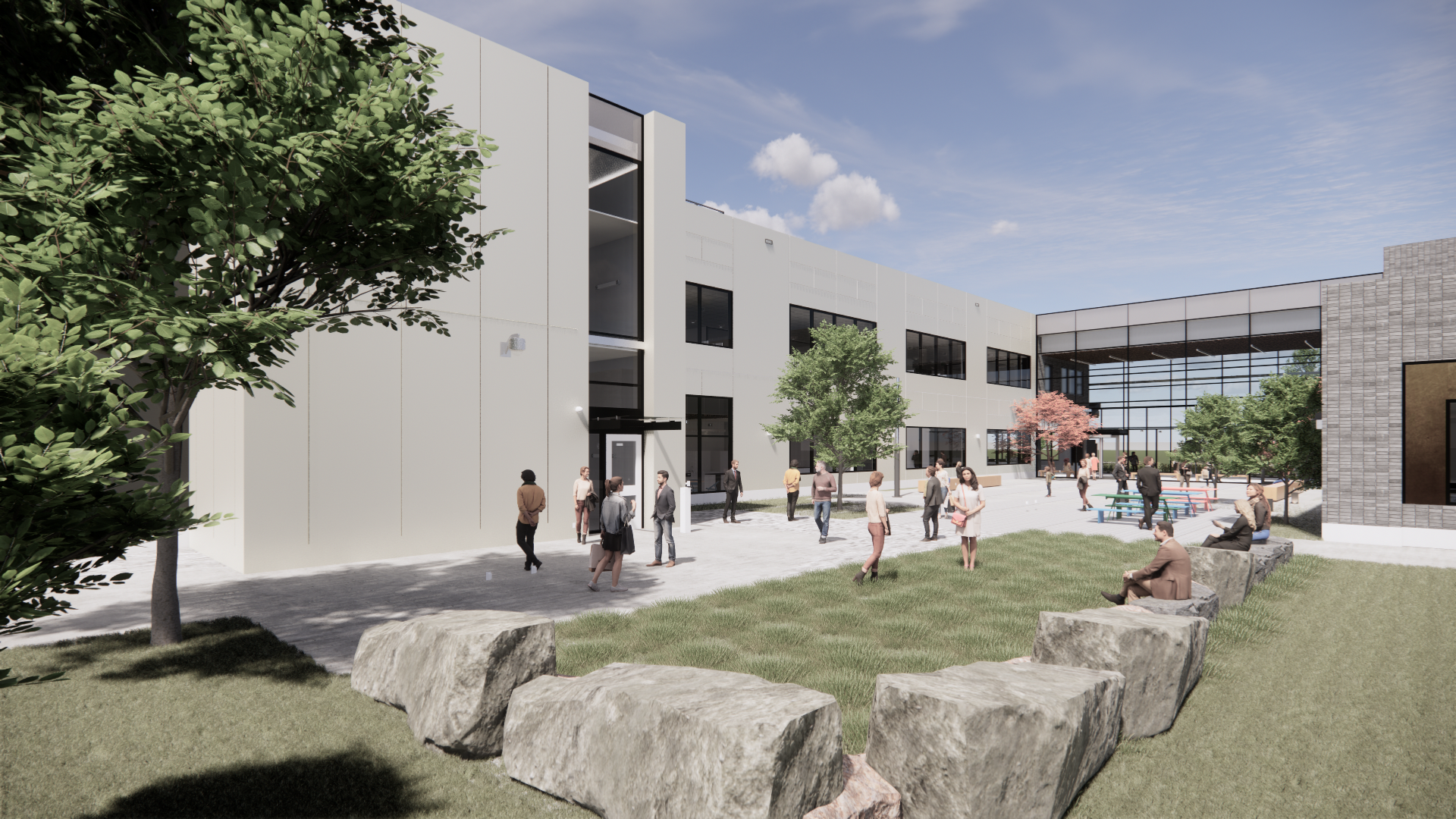
Three concepts were looked at and costed out in 2019, and the courtyard design was the lowest cost. The other two concepts were rectangular in shape. The courtyard design was chosen with public input through public sessions and a survey.
Of the three concept designs, the two-storey courtyard layout was the most cost efficient when compared to the three-storey options.
Due to the high water table and type of soils, the required foundation work to support a three-storey building would require more costly deep foundations to support the building. In addition, as the building footprint is made smaller and the number of floors increased, usable space is sacrificed on each floor due to the requirement for elevators, stairs, washrooms and other facility services.
The building size has been reduced by approximately 5,000 square feet from the design that was completed in mid-2020. This resulted in the reduction of space for about 30 to 40 staff.
The reduced building size of 44,600 square feet for the replacement Civic Centre provides for 122 seats of which 20 are for future growth.
There are more than 150 staff that are based out of the replacement Civic Centre that includes 10 Finance Division staff that worked out of the Annex, (the former police station building on the property near the ROC). This includes staff that worked out of the original Civic Centre and staff that work from home. The size of the building has been reduced because of the Flexible Work Policy that allows some staff to work from home.
With the replacement Civic Centre, expansion will likely not be necessary for at least 50 years from the time of its construction in 2025 (that is, no expansion until 2075). By that time, it is reasonable to assume the workforce assigned to the Civic Centre could grow to 200 staff.
Modest growth in staffing will be required to support the growing population and employment base. By 2051, Georgina’s population is projected to grow by 20,000 residents from a current estimated population of 50,000 to 70,000. Employment growth is projected to grow by approximately 10,000 additional jobs by 2051. Population/employment growth projections to 2075 are not available but it’s reasonable to assume continued positive growth.
Building the replacement Civic Centre to house 120 staff strikes a logical balance between current and future needs over the next 50 years. Moving forward by 2025/26, it is projected that the replacement Civic Centre will need to accommodate up to 100+ staff. This leaves 20 spaces for growth over the next 50 years, out to 2075. This will require a continued progressive Flexible Work Policy, formal desk-sharing program and online self-serve/digital advancements.
Yes. The design of the building focussed on measurable energy efficient design systems and features such as hybrid roof top mechanical units, energy recovery wheels, roof steel structure and insulation to accommodate future photovoltaic arrays (solar panels).
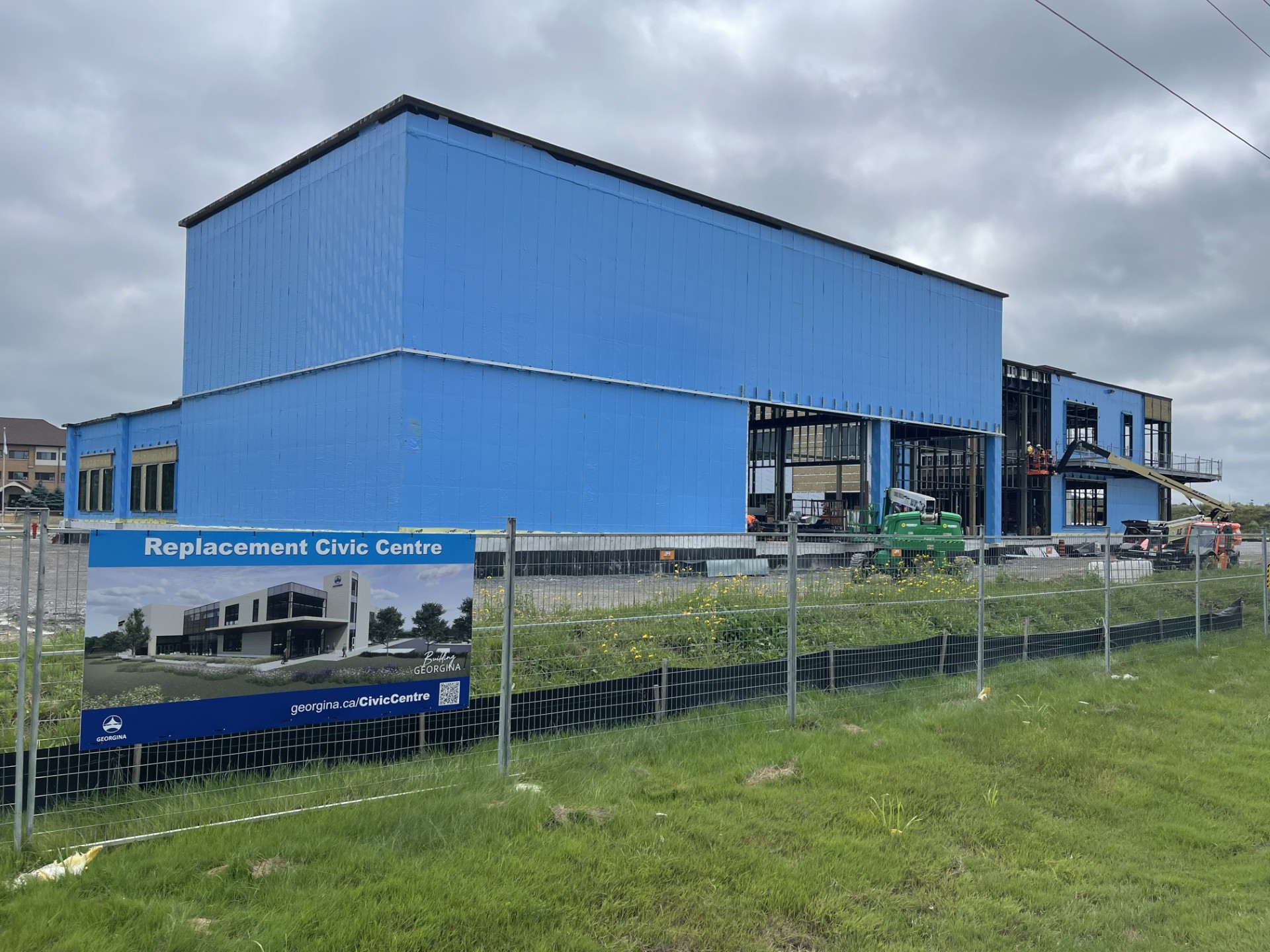
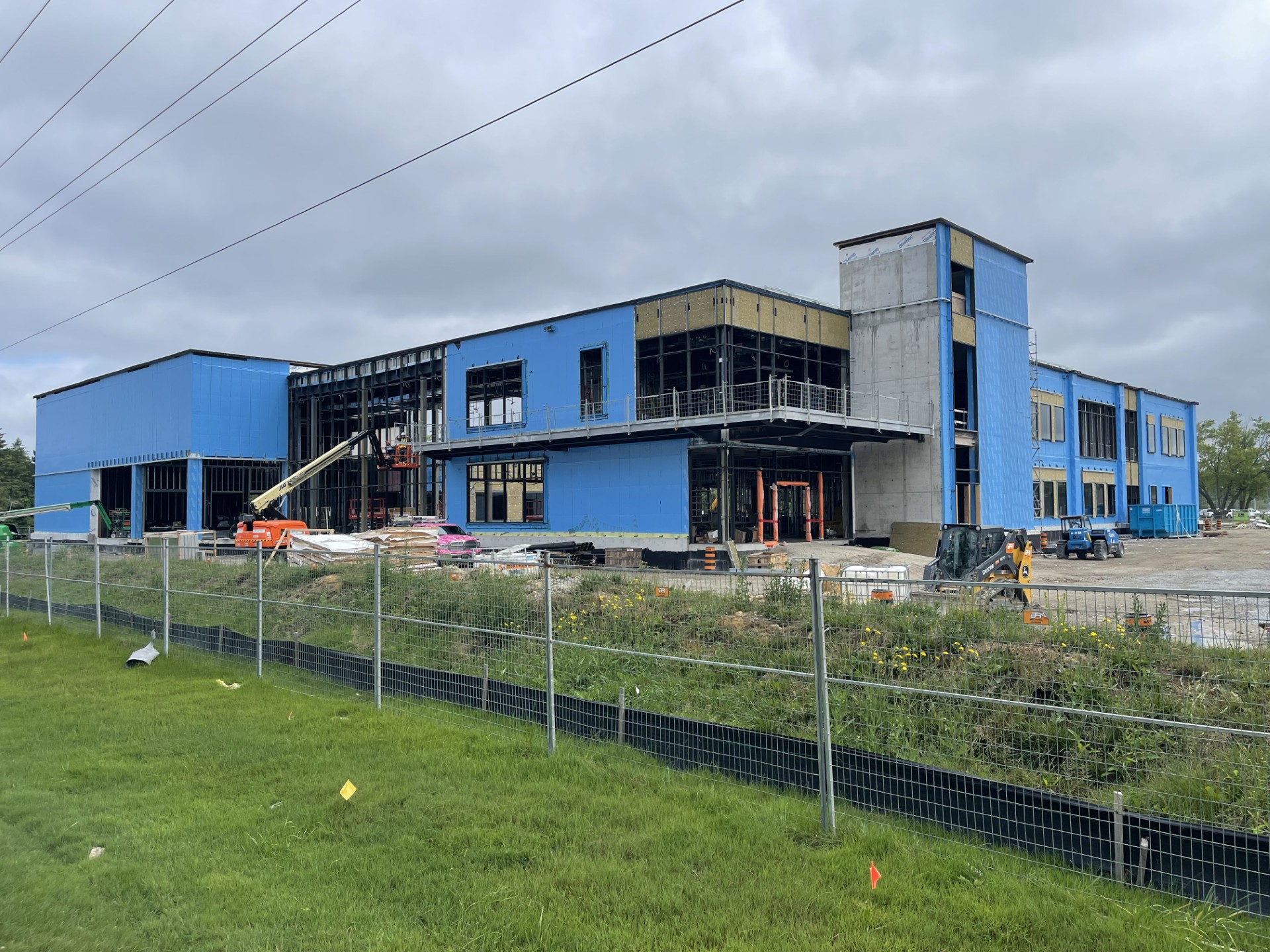
A groundbreaking ceremony was held on June 13, 2024, for the replacement Civic Centre.
The project including demolition and final landscaping is projected to be completed in Q2 2026.
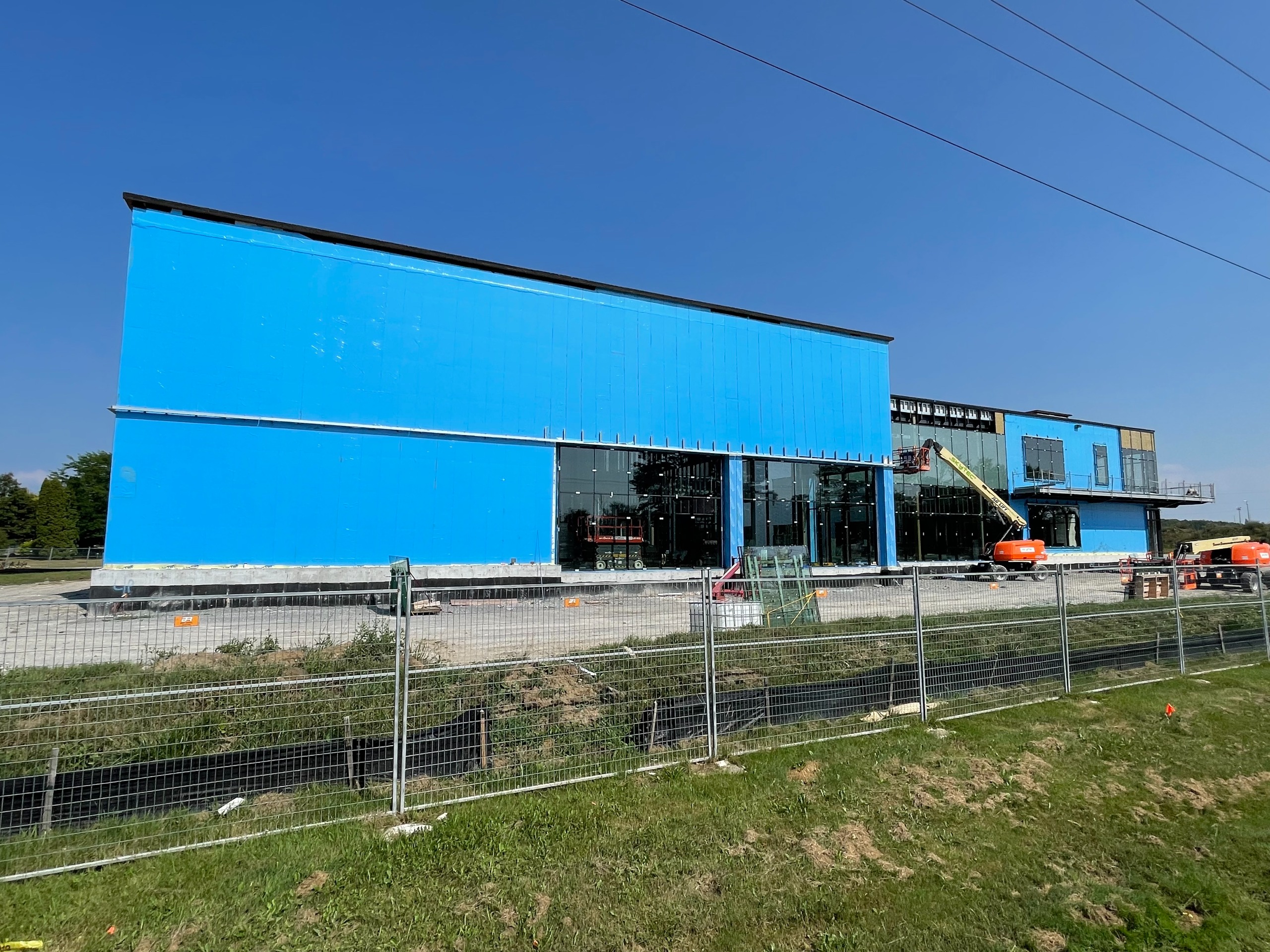
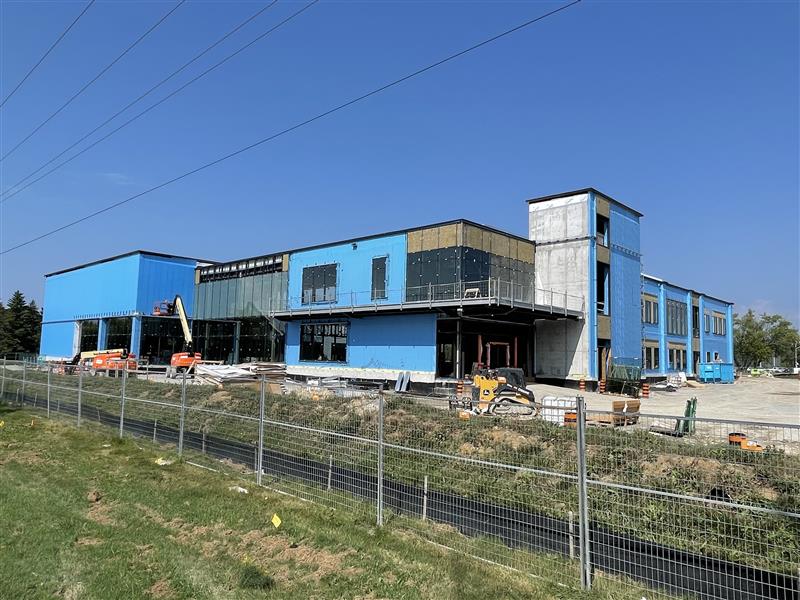
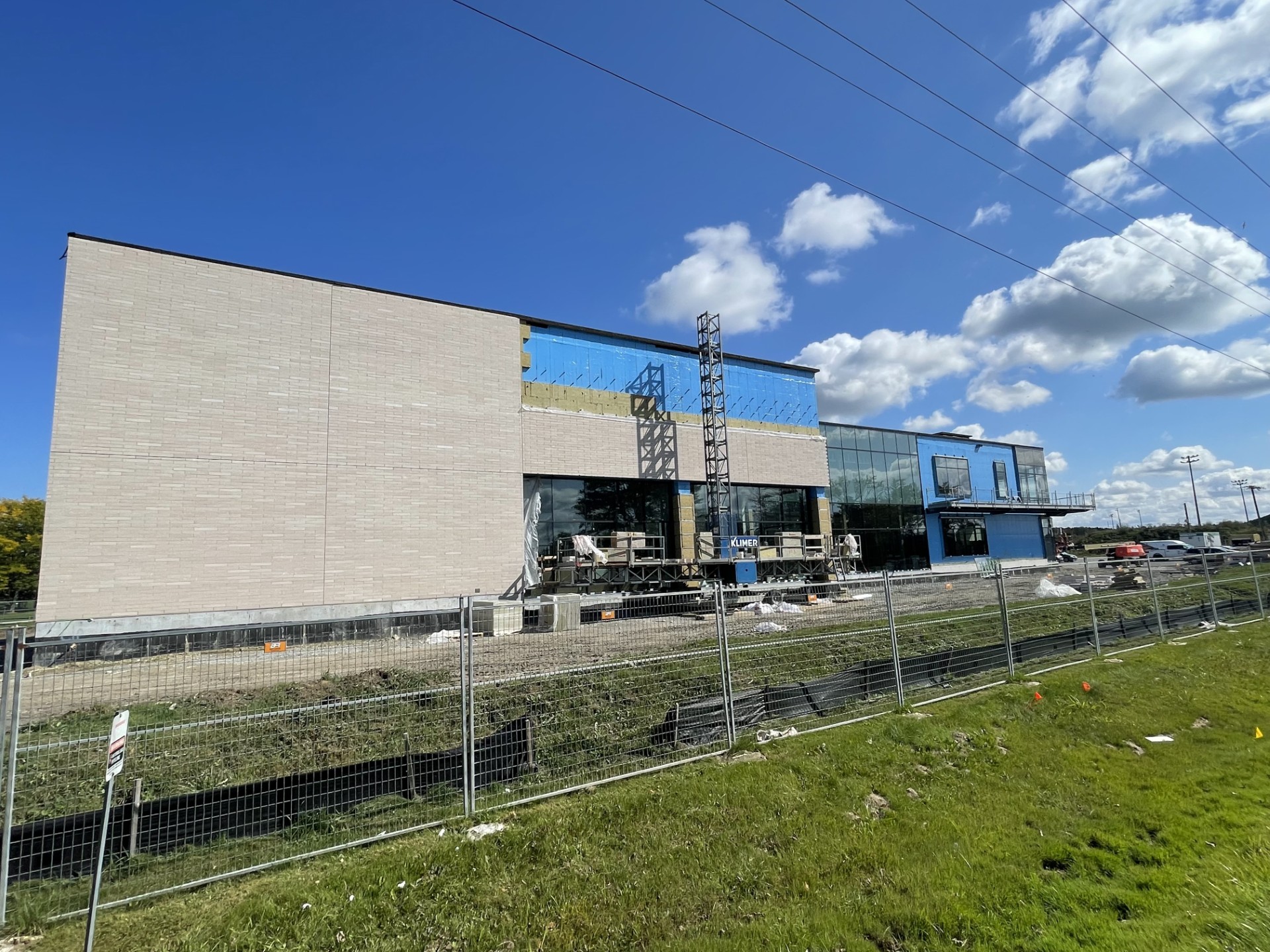
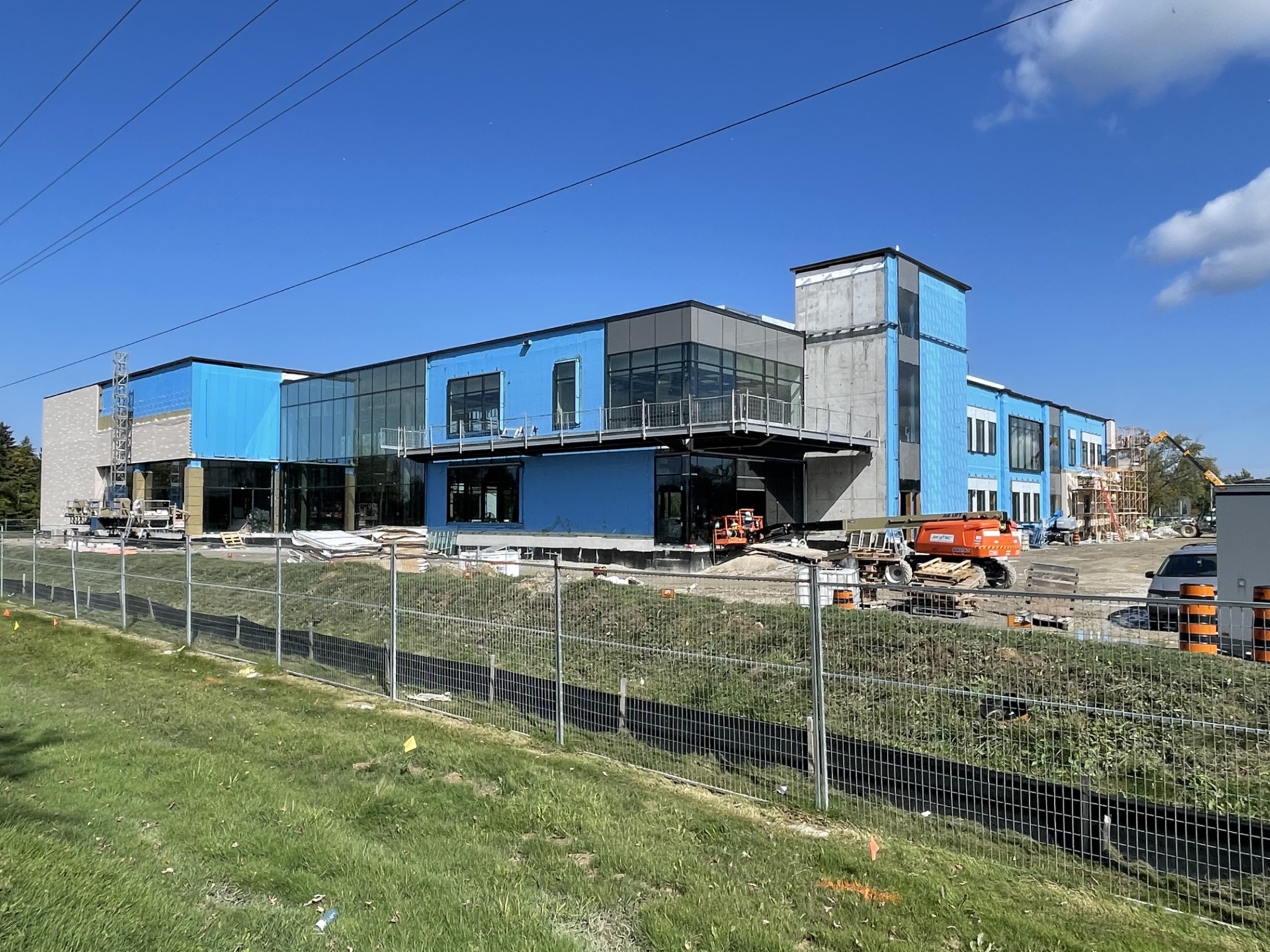
Visuals
Image 1 of 10
Questions
Have a question?
Submit your question to Georgina's team
To ask a question you must create an account or log in.
These are the people that are listening and responding to your questions.
Stefan Hordatt
Manager, Capital Projects
{{question.description}}